

Medgyaszay, Istvan
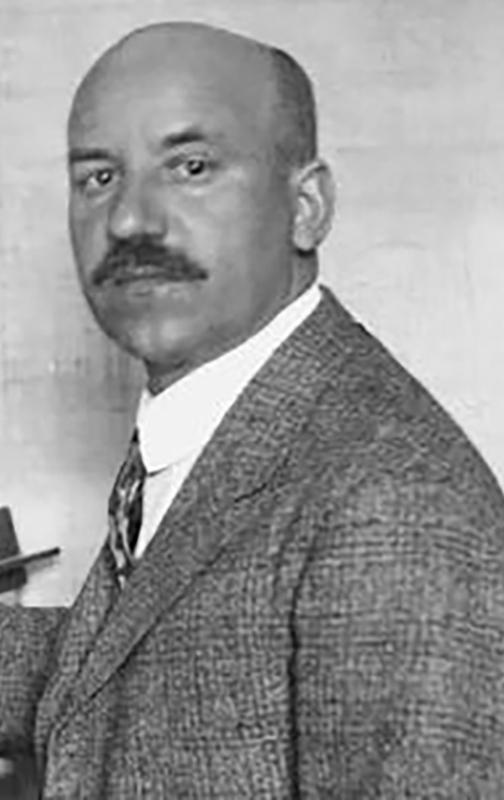
Name
Medgyaszay, Istvan
Gender
Male
Birth
August 23, 1877 Budapest
Death
April 29, 1959 Budapest
Descriptive Note
Istvan Medgyaszay was a Hungarian architect. Medgyaszay studied at the Vienna Academy of Fine Arts as the student of the famous master of the Vienna Sezession movement, Otto Wagner. (he did not study at the Hungarian Academy of Fine Arts, though). At the same time, he studied at the ’Technical College’ in Vienna (today the University of Technology – Technische Hochschule) and the Hungarian Royal Joseph University (today Budapest University of Technology and Economics). He created works praised for their synthesis of national romanticism and functionalism. Reflecting his anthropological interest in the origins of Hungarians, Medgyaszay integrated engineering innovations such as reinforced concrete and compact architectural structures with archetypal motifs drawn from Hungarian folk traditions. Elements such as the tulip (also present in the Turkish tradition) and animal symbols (e.g. the deer and doe, drawn from the mythology of Huns and Magyars, or the dove and the peacock as symbols of beauty and freedom) appear on many of his public buildings and apartment houses. One of his most significant buildings is the theatre in Veszprém, which is considered the first ferro-concrete theatre building in Europe, completed in 1908. He also designed the first ferro-concrete church in the Kingdom of Hungary in 1910, the Church of St. Elizabeth of Hungary in Rárósmulyad (today Muľa, Slovakia). His most daring plan was the construction of a National Pantheon in Budapest on the Gellért Hill, the design of which won awards in Vienna in 1903, Budapest in 1906, Paris 1907, London 1909 and Monza in 1923.
Roles
Influencers
Related Built Environment Objects