The participation of China in the Exposition of Turin 1911
The exhibits devoted to China were in the Pavilion of the Arts Applied to Industry, the first main structure that visitors encountered upon entering the exposition from the Main Entrance at Umberto I Bridge. China was also present in the Pilonetto area, with exhibits devoted to the manufacture of silk.
In the Pavilion of the Arts Applied to Industry, China was represented in either two or three halls (reports vary on the number of halls). The article, “Fra padiglioni e gallerie all’Esposizione di Torino,” (Le Esposizioni di Roma e di Torino descritte ed illustrate, n.29, luglio 1911, p. 231) describes the exhibits thus:
“A destra, una serie di quadri ricamati a gigli, a biancospini, ad aquile, a leoni, richiama alla memoria i meravigliosi paraventi giapponesi, senza rivali.
Tre scatole di cristallo ospitano modelli di pagoda in argento.
Nelle bacheche profuse intorno si ammirano lavori in marmo e tartaruga singolarissimi: scimmie che si alternano a draghi mostruosi, con grovigli fantastici.
Una scuola femminile di Pechino presenta una serie di ricami veramente meravigliosi: la scuola di Ngohan, della provincia di Riun, diversi paesaggi ricamati; così pure la scuola di Canton.
L’industria dei vasi di Pechino è rappresentata splendidamente: vasi meravigliosi per gli smalti a fuoco, e vasi cloisonnés di fattura squisita.
Nel centro dell’ultima sala c’è un bazar cinese così tutte le piccole meraviglie di pazienza degli artefici del Celeste Impero: piccoli Buddha dal ventre obeso, maschere in terra cotta, vasi colorati, ventagli dipinti ove piccole mousmé occhieggiano civettuole dagli occhi languidi, tagliati a mandorla; scimitarre dall’impugnatura corta e larga, tutte rabescate….
C’è insomma tutto un emporio di ninnoli squisitamente curiosi, appetibili, graziosi o impressionanti: di quelle cosine inutili che sono… assolutamente indispensabili nei vostri salotti – nei vostri boudoirs, signore, nelle sale da pranzo come nelle sale da studio; di quelle bizzarre chinoiseries che porgono il pretesto, il tema a conversazioni, altrimenti languide… il “salvagente” nell’onda della noia e dell’imbarazzo, in tanti casi.
[…]
E un po’ dappertutto si vede l’ambito cartellino: “Venduto”; e spesso la serie dei cartellini forma una lunga coda...”
On the right, a series of paintings embroidered with lilies, hawthorns, eagles, lions, recalls the wonderful unrivalled Japanese screens.
Three crystal boxes house silver pagoda models. In the display cases scattered around you can admire very singular works in marble and turtle: monkeys alternating with monstrous dragons, with fantastic tangles.
A girls' school in Beijing presents a series of truly wonderful embroideries; the Ngohan school, in the province of Riun, presents various embroidered landscapes; and so does the Canton school.
The Beijing vase industry is beautifully represented: wonderful vases of fired enamel, and cloisonné vases of exquisite workmanship.
In the center of the last room there is a Chinese bazaar with all the small wonders of patience of the creators of the Celestial Empire: small Buddhas with obese bellies, terracotta masks, colored vases, painted fans where small mousmés with languid, almond-shaped coquettish eyes peek out; scimitars with short and wide handles, all guilloche...
In short, there is a whole emporium of exquisitely curious, delicious, graceful or impressive trinkets: of those useless little things which are . . . absolutely indispensable in your living rooms - in your boudoirs, ladies, in dining rooms as well as in study rooms; of those bizarre chinoiseries that provide the pretext, the theme to otherwise languid conversations... the "lifesaver" in the wave of boredom and embarrassment, in many cases.
And almost everywhere you can see the coveted “Sold” tag; and often the series of cards forms a long line….
This article, signed with the initials N.A., displays the clichéd representation of “the Orient” that the World’s Fairs contributed to popularize: a mix of fascination and repulsion, of wonder and condescension. In this space, unique object d’arts praised for exquisite workmanship morph, without logical explanation, into trinkets reproduced en masse and sold as cheap curiosities to be displayed in the average bourgeois living room.
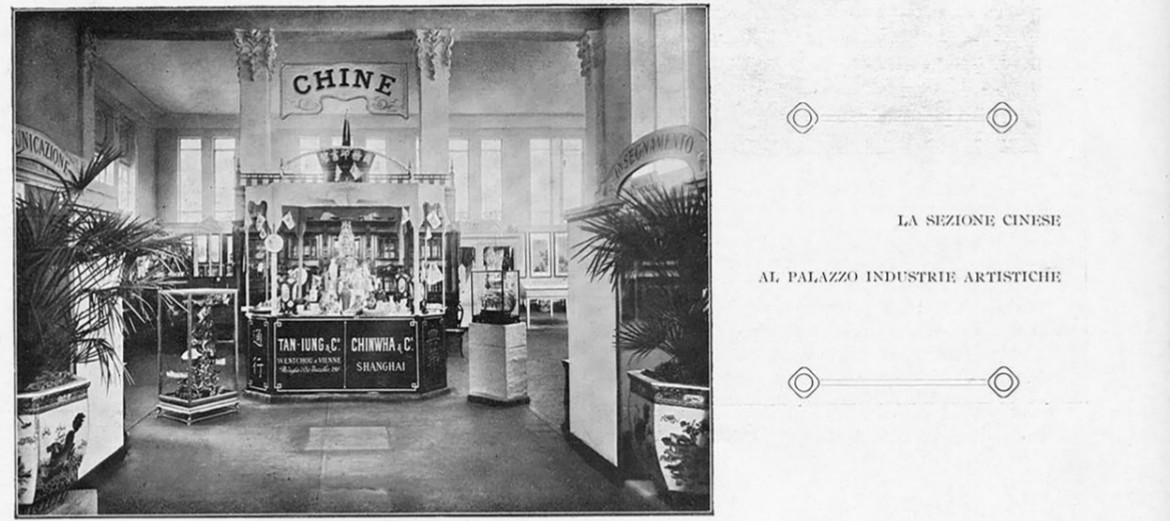
“La Cina e la Persia alla Mostra di Torino”. Giornale ufficiale, n.35, p.556
Another piece, “Cina e Persia,” in the Guida pratica, developed similar clichés of Western superiority, and focused on the progress that the “civilized West” has brought to China, allowing the development of infrastructures such as railways, schools, public works, and metallurgy.
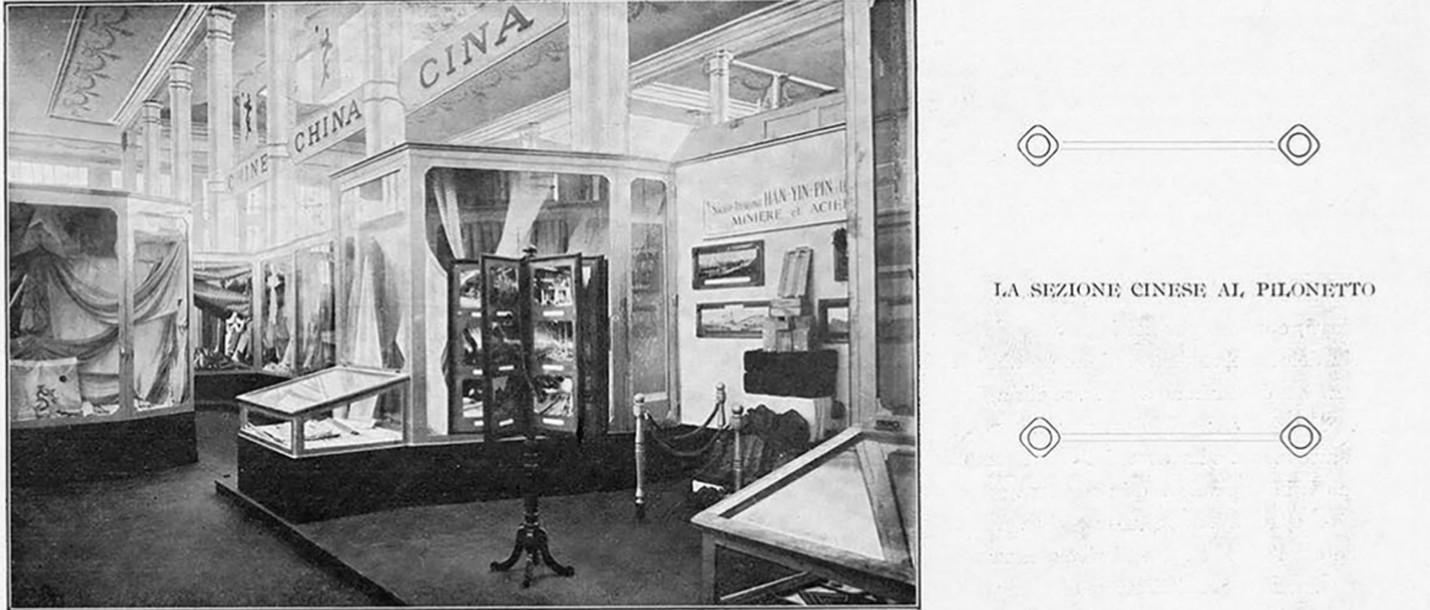
“La Cina e la Persia alla Mostra di Torino”. Giornale ufficiale, n.35, p.556
China also played a role in the Silk Exhibit in the Pilonetto area. This exhibit presented eight dioramas describing the history of silk, starting from its origins in ancient China, and proceeding through a series of emblematic tableaux that depicted the crucial moments in the development of the silk industry as it moved from Asia to the West. As was typical of the Word’s Fairs master narrative, this progressive journey culminated in the presentation of the new technologies and production methods that Western ingenuity was applying to revolutionize ancient artisanal practices.
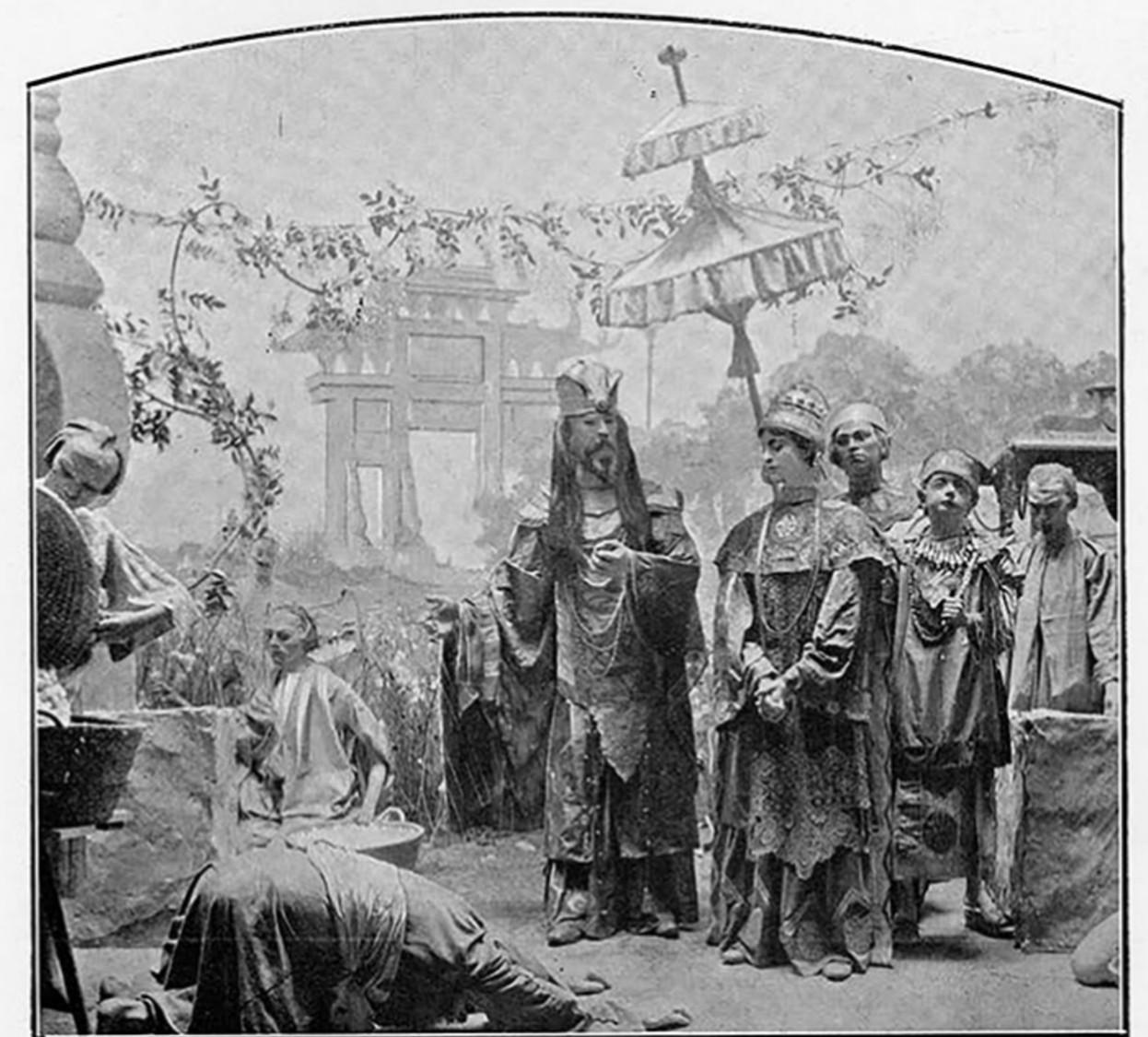
Representation by Giovanni Battista Carpanetto of an ancient Chinese Emperor and Empress examining the manufacture of silk in China in 2698 B.C. in E. Ferrettini. “La storia dell’arte della seta nei diorami dell’Esposizione”. Giornale ufficiale, giugno 1911, p.416-417