News
October 23, 2025
Turin 1911 at the 2025 European Night of Researchers
By Alessandra Spreafico
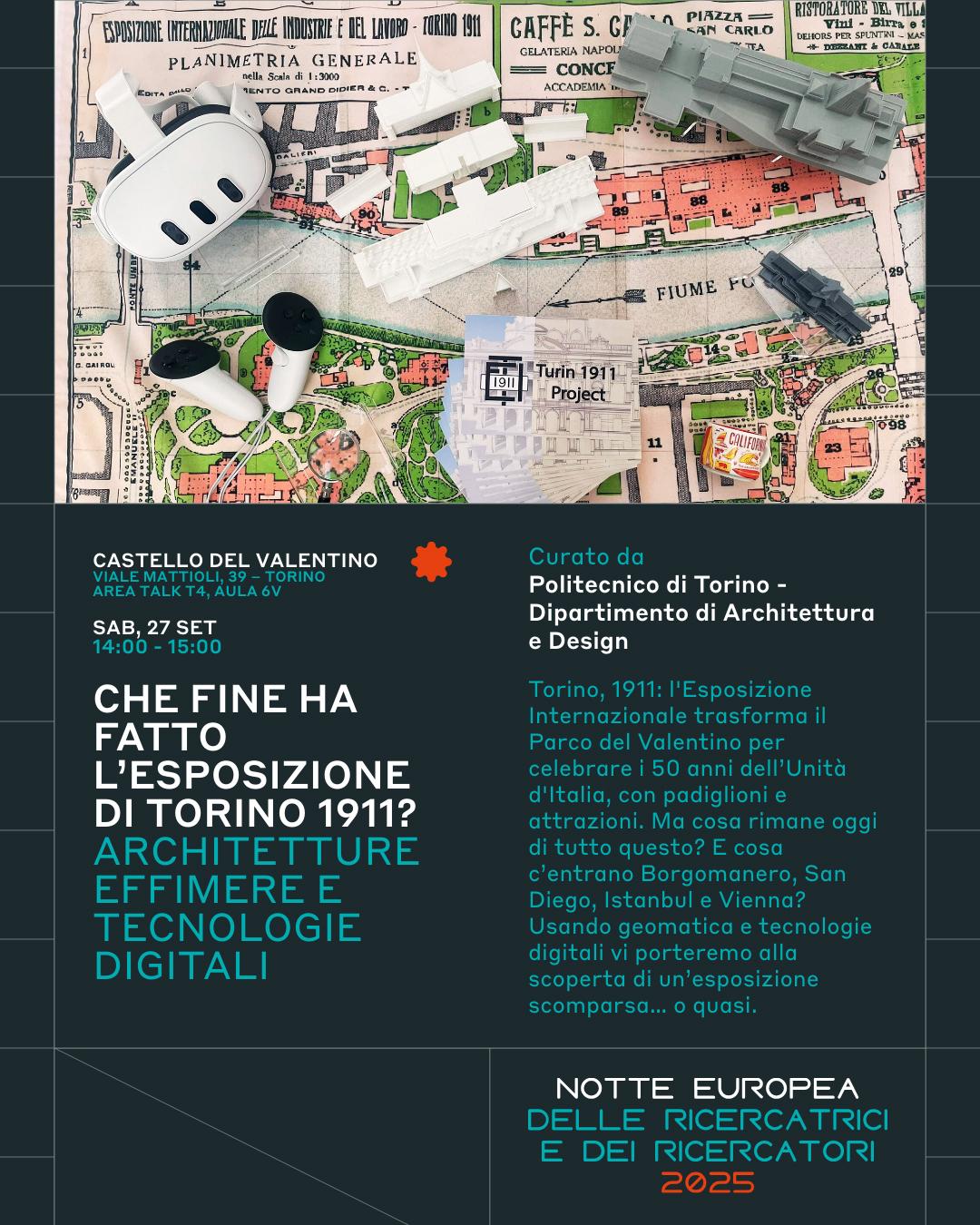
“What Happened to the 1911 Turin Exhibition? Ephemeral Architectures and Digital Technologies” is the subject of the science café at the European Night of Researchers held at the Valentino Castle (Turin, Italy) on Saturday, the 27th of September 2025.
The research becomes a story
<Turin, 1911: the International Exhibition transforms Valentino Park to celebrate the 50th anniversary of Italy’s unification, with pavilions and attractions. But what remains of all this today? And what do Borgomanero, San Diego, Istanbul, and Vienna have to do with it? Using geomatics and digital technologies, we’ll take you on a journey to rediscover a long-lost exhibition… or almost.>
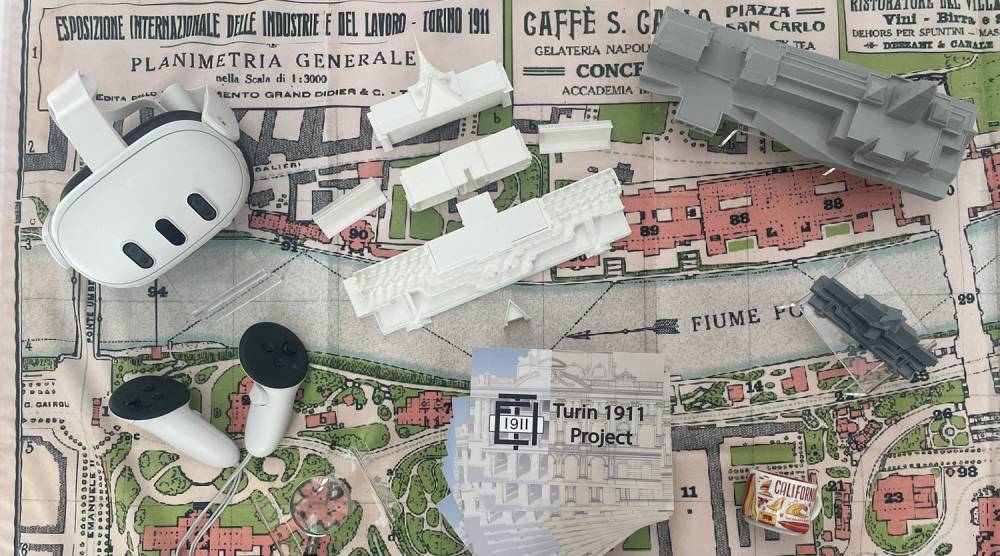
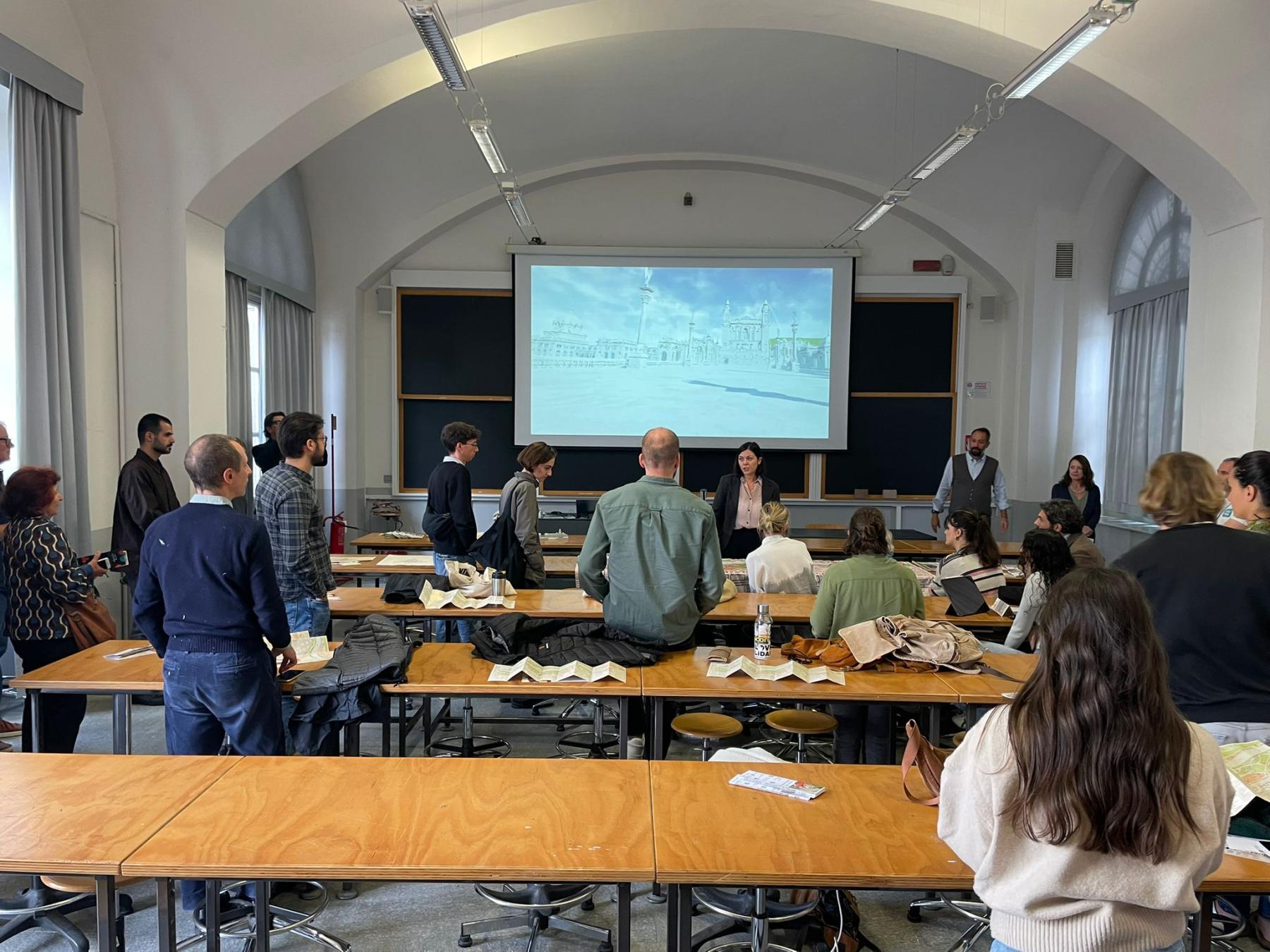
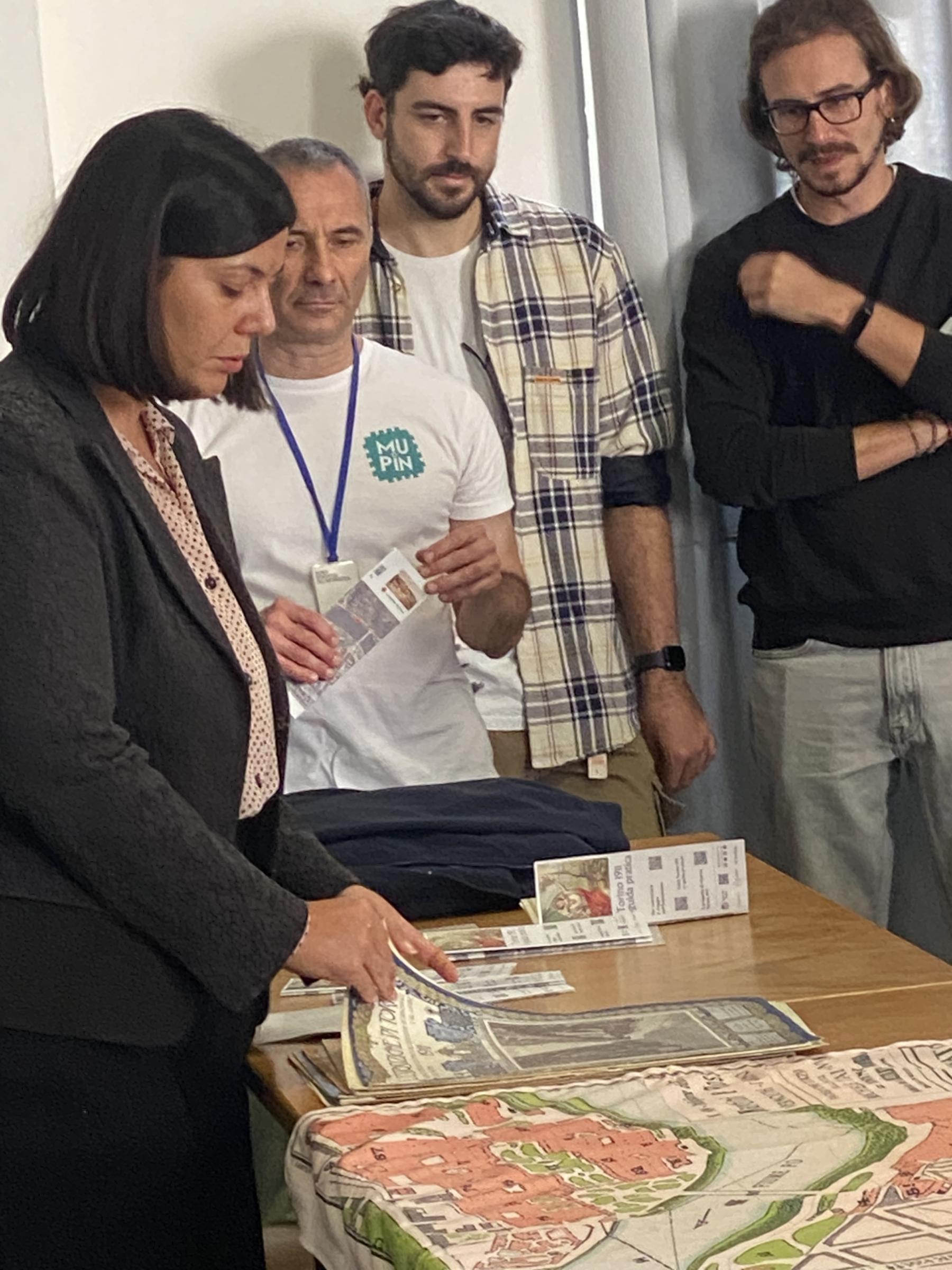
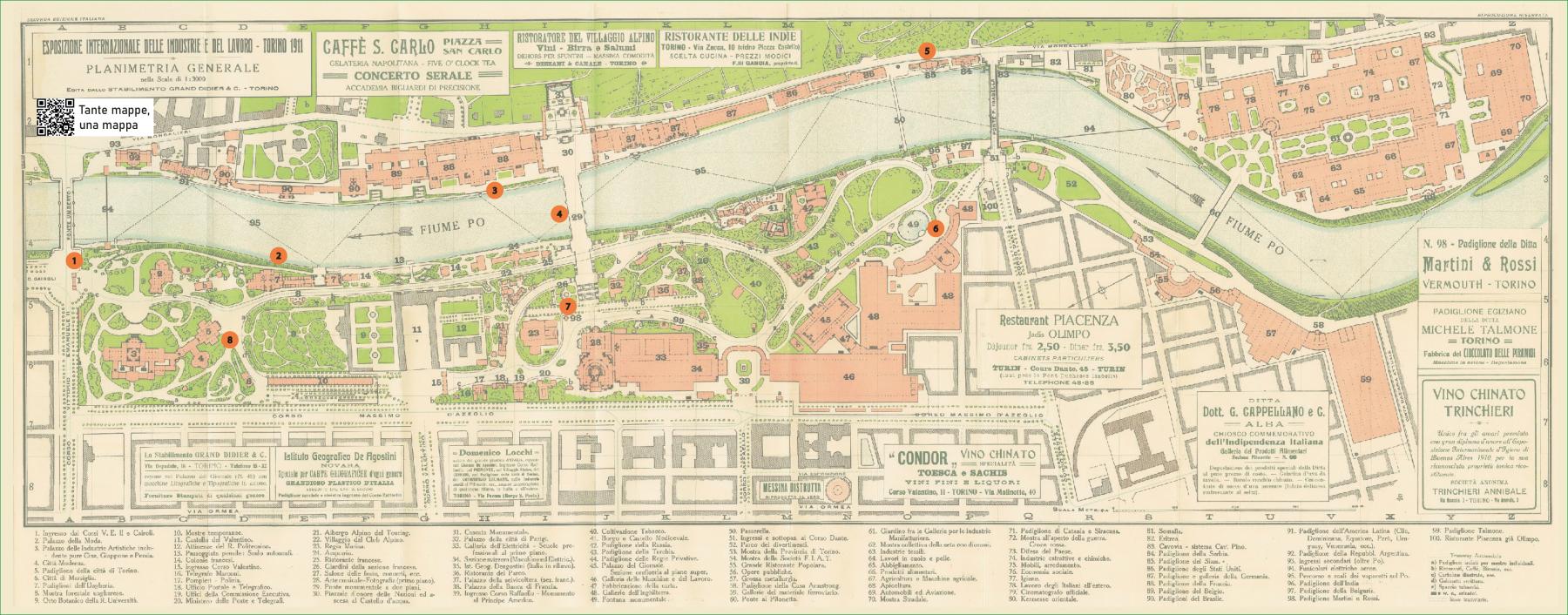
In the charming Valentino Castle, Cristina Della Coletta (University of California, San Diego), Alessandra Spreafico and Filiberto Chiabrando (Politecnico di Torino) led visitors in an interactive discovery of the Turin 1911 Fair and research project. The event was conceived as a story, an interactive dialogue between researchers, the public and physical materials. Many items were at the disposal of the public: original magazines - Giornale ufficiale illustrato - , a fairground map reproduction - Planimetria Generale (Grand Didier) -, reproductions in scale of engeneer Stefano Molli's technical drawings, stereographs visible with an early-XIX-century stereoscope, and 3d printings of Hungarian and Siamese pavilions at different scales.
An invisible ‘city in the city’ takes life digitally
Through some videos, Filiberto Chiabrando introduced the public into the discovery of the research project, a fruitful collaboration between experts in Geomatics and Digital Humanities from Politecnico di Torino and the University of California San Diego, which started in 2018.
Thanks to Geomatics and digital technologies, the Turin 1911 team is bringing to digital life, an invisible ‘city within the city’, piece by piece. It is a city made of pavilions from around 30 countries and covering an area of around 1.2 million square meters. By integrating 3D metric surveys, 2D plans and parametric models, some key architectures have been reconstructed today.
The research future in people’s hands and eyes
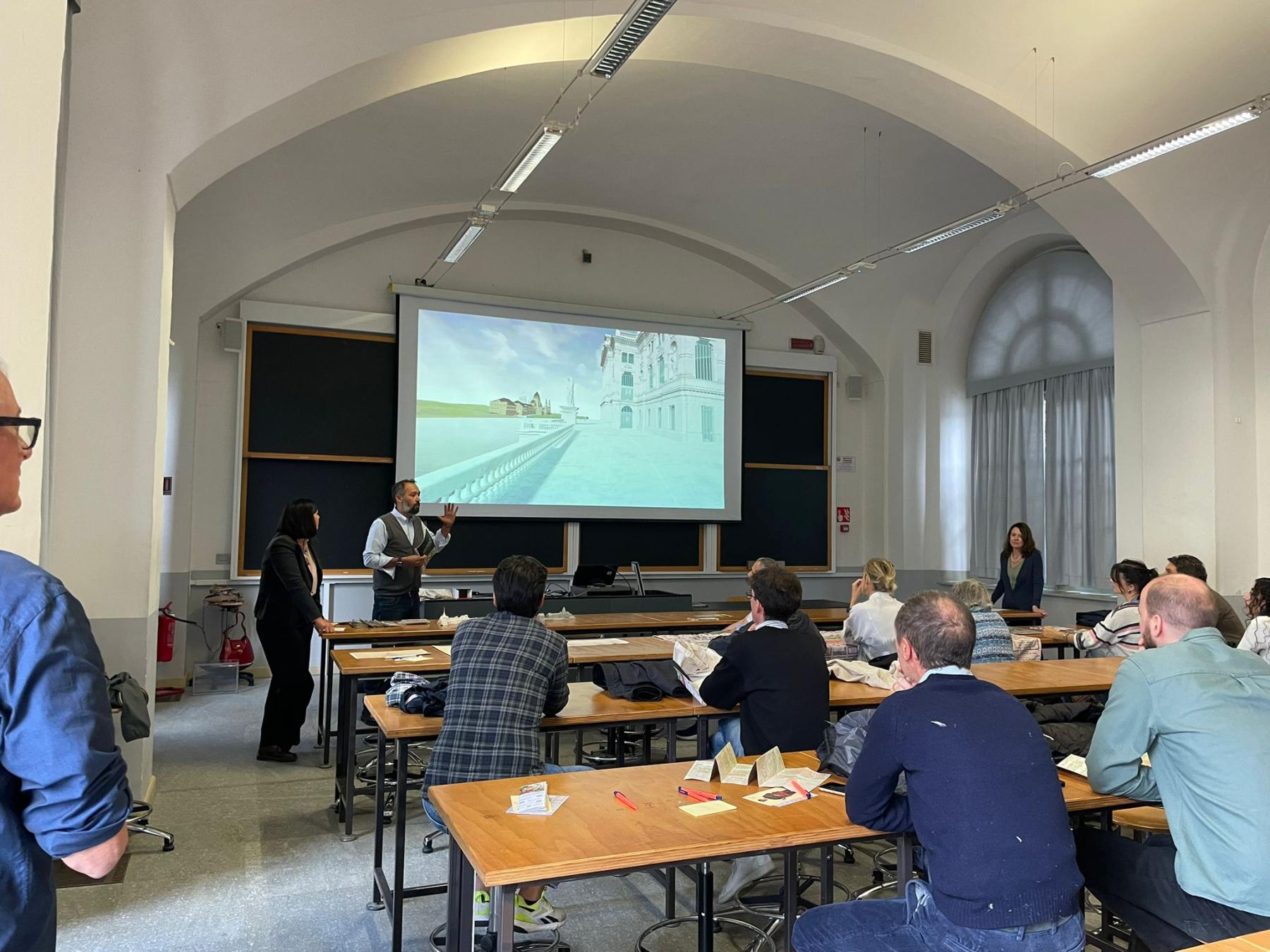
In the room 6v of the Valentino Castle, a video showed these reconstructed models to visitors who admired the potential of the first test done with virtual reality. 3D digital reconstructions composed by a mixture of large and small models, made by Mohammadreza Mehdizadeh (Sina) and Erica Casareto, can be easily navigated in a single digital environment through a visor.
Chiabrando illustrated how 3D models, 3D printing at different scales and new tools, such as virtual reality, can pave the future way of the research, not only for the historical research, but also for the public, who can experience first-hand what researchers are discovering.
|
|
From Turin to San Diego, passing by Istanbul, Vienna and the small Borgomanero
The Turin exposition was a triumph of ephemeral architectures, but what remains today? The event lasted 6 months, and nothing is left physically in the Park. For years everything remained enclosed in archives. Alessandra Spreafico explained the discovery of these archives spread around the globe and their connections. The question <what do Borgomanero, San Diego, Istanbul, and Vienna have to do with the Exposition?> found a reply in the nature itself of the Exposition. International and ephemeral was the Exposition, international and ephemeral are the materials describing the Fair even today. And so it is revealed the mysterious why of a plan of the Hungarian Pavilion written in French is in the State Archive of Vienna today - Plan des Pavillons Hongroises.
Framing the puzzle: from archival materials to literature
The interest in ephemera pushed Cristina to start the Cristina Della Coletta Private Collection in San Diego which provides the majority of the archival materials available on the italyworldsfairs.org website. The collaboration with public and private entities and owners of archival materials - among them the Fondazione Achille Marazza of Borgomanero owning the Stefano Molli archive - helps to frame out the puzzle of an event that happened exactly where the research café took place, in the amazing Valentino Park, more than one century ago.
Not only ephemera informed the Turin 1911 project, put also literature. The Exposition inspired poets, journalists and novelist, explained Cristina Della Coletta. Guido Gozzano, the poet of the small things and crepuscularism, the anti-D’Annunizio, framed Torino as an old and dusty city which tried to become the capital city of the unified Italy. Gozzano’s words in ‘Un vergiliato sotto la neve’ were the source of our experiments using Artificial Intelligence-recreated voices to narrate the Exposition.
What do you remember the most? What is next? Write it in a post-it!
As one of the Local Time Machine projects of the Time Machine Organization, Turin 1911 offered a unique journey helping visitors of the European night to imagine this past event.
Thanks to digital technologies, the Turin 1911 Fair is no longer just a footnote in the history of Turin, but an immersive and tactile experience, a retrieve heritage promising to inspire future research. The science café ended with the enthusiasm of an audience who was able to contribute to the research. <What do you remember the most? What is next?> are the questions that researchers asked to the public who, through simple post-it notes, was free to propose ideas and suggesting possible developments for the project.
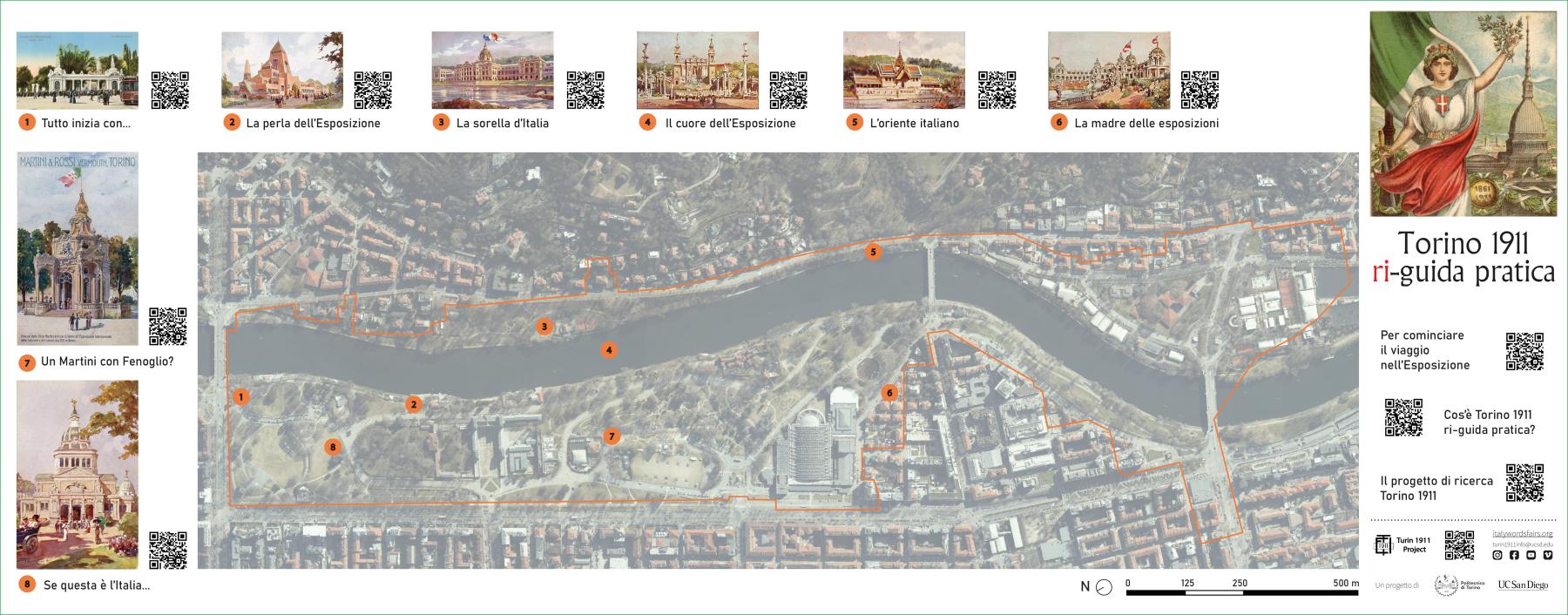
In the end, a gift was left to the public, the Ri-guida pratica, a tourist map bringing people at the discovery of the Turin 1911 World's Fairs architecture in the actual Valentino Park.
A special thanks goes to...
The science café was made possible thanks to the support of many people of the Turin 1911 team, in particular Anthony King and Erica Casareto. Around 40 people attended this event, among them were colleagues, friends, relatives, who supported us also by promoting this event. A special thanks goes to each person who was part of the science café.
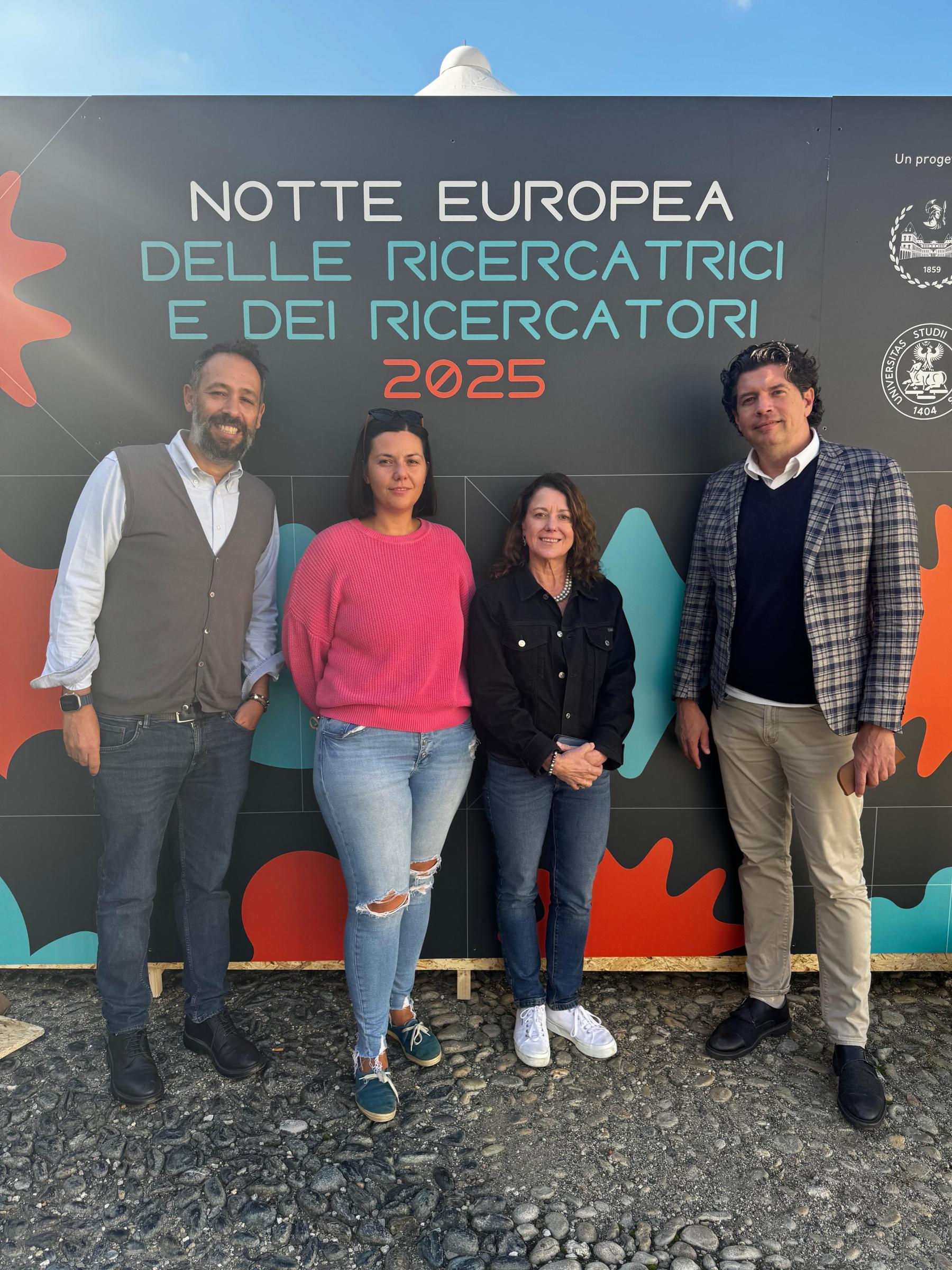
(from left to right) at the 2025 European Night of Researchers